
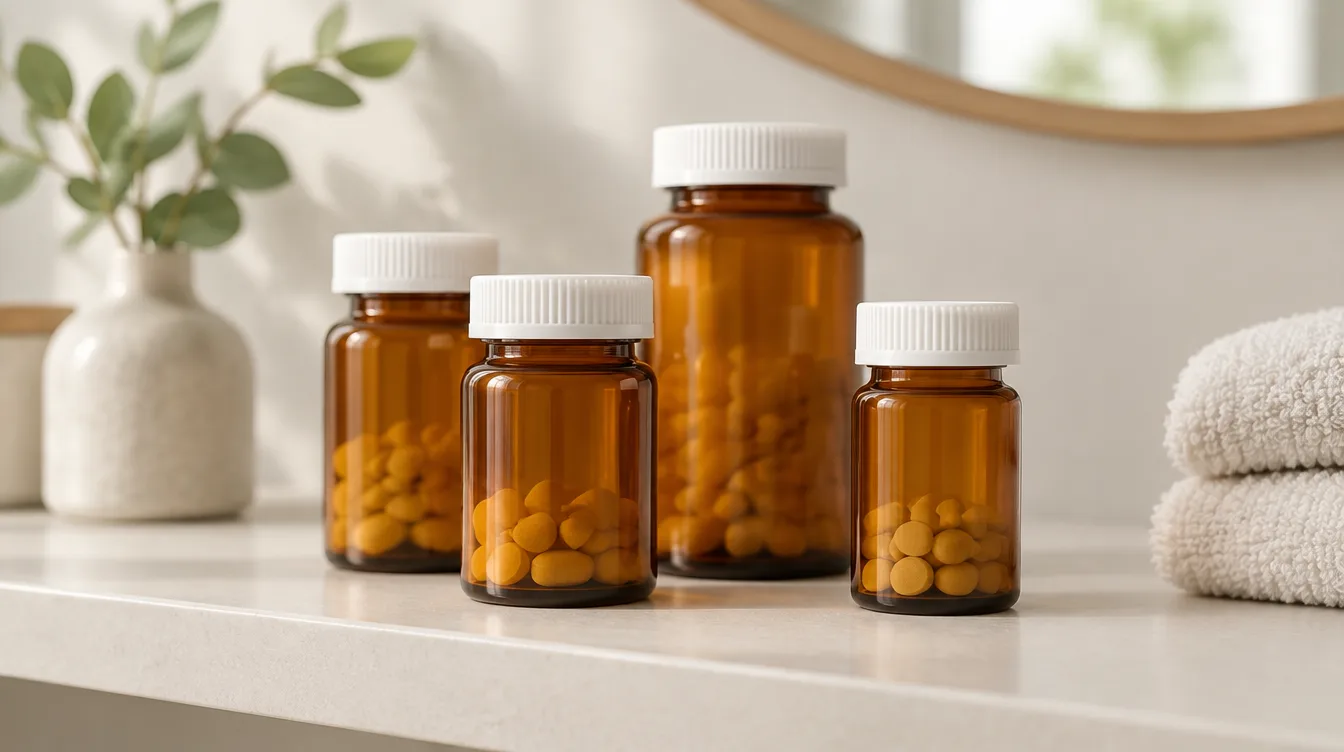
An expiry date is the last day the manufacturer guarantees full potency — not the day a medicine becomes poisonous. For most sealed, solid medicines stored properly, a recently passed date means slightly reduced strength. But some medications must never be used expired, and in Arizona a bigger problem than the date is usually the storage temperature.
Never rely on expired: nitroglycerin, adrenaline auto-injectors (EpiPens), insulin, inhalers, eye drops, liquid antibiotics, and anything you would need in an emergency.
What the date actually means
Manufacturers test a medicine’s stability and set a date up to which they will guarantee it retains its labelled potency and quality in its original, unopened container under the recommended storage conditions. Past that date, the company makes no promise — which is different from the product becoming dangerous.
For most solid dosage forms — tablets and capsules, sealed, stored cool and dry — degradation is gradual. A paracetamol tablet that expired three months ago is very unlikely to harm you; it may simply be marginally less effective. That is an acceptable trade for a headache and an unacceptable one for chest pain.
Never use these past their date
Nitroglycerin. Loses potency quickly, and particularly once the bottle is opened. If you carry it for angina, you are carrying it for a moment when reduced potency could be catastrophic. Replace on schedule.
Adrenaline auto-injectors. Check the expiry and the window — the liquid should be clear and colourless. Discoloured or cloudy means replace it now. In an anaphylaxis emergency an expired injector is better than nothing at all, but plan so you never test that.
Insulin. Sensitive to both time and temperature, and loss of potency shows up as unexplained high blood sugars.
Inhalers. The propellant and dose counter both matter; an old inhaler may deliver far less than you think during an asthma attack.
Eye drops. Preservatives degrade, and a contaminated drop introduces infection directly into the eye. Most should be discarded a month or so after opening regardless of the printed date.
Liquid antibiotics and reconstituted suspensions. Short shelf life, often needing refrigeration, and frequently only days once mixed.
Any medicine that has changed — crumbling, discoloured, cracked, hardened, cloudy, separated, or with a new smell. Trust that over the date.
Two others worth flagging: anticonvulsants, thyroid medication, warfarin, and digoxin have narrow margins where small potency changes matter clinically — do not stretch those. And an expired course of antibiotics should not be used at all, for a different reason covered below.
Arizona ruins medicine faster than the calendar does
This is the local point, and it is more important than the expiry date for most households here.
Heat and humidity accelerate chemical degradation. The two most common places people store medication are the two worst: a bathroom cabinet, which is repeatedly hot and humid, and a car, where interior temperatures in an Arizona summer vastly exceed any recommended storage range. Medication left in a glovebox or a handbag in a parked car in July can be effectively ruined in a single afternoon, whatever the label says.
Insulin, adrenaline injectors, inhalers, and liquid antibiotics are especially vulnerable. If you carry an EpiPen in a car, that is worth rethinking — and worth asking us about.
Store medicines somewhere cool, dry, and dark: a bedroom drawer or a kitchen cupboard away from the stove and sink. Keep them in the original container with the label and desiccant, and do not decant a month’s tablets into a warm car cupholder.
About that leftover course of antibiotics
Do not keep it, and do not take it later. Three reasons.
You will not have enough for a full course, and a partial course is how resistant bacteria are selected for. You may be treating something viral, where antibiotics do nothing but give you side effects. And you will not know whether this infection needs that antibiotic — the drug that worked for a urinary infection is often wrong for a chest infection.
The same logic applies to sharing. Never take someone else’s prescription and never give yours away, however similar the symptoms sound. Dose, interactions, allergies, and kidney function are all personal.
Disposing of medicines properly
Take-back is best. Many pharmacies have permanent drop-off kiosks, and the DEA runs national Take Back Day events twice a year. Maricopa County and several local police departments also operate collection sites. This keeps drugs out of both the water supply and the wrong hands.
Do not flush medicines as a default — most should not go into the water system. The exception is a short FDA “flush list” of a few opioids and other high-risk drugs where the danger of accidental exposure outweighs environmental concerns, and only when no take-back option is available.
If you must use household rubbish: take the tablets out of the container, mix them with something unappealing like used coffee grounds, cat litter, or dirt, seal that in a bag, and throw it away. Scratch out all personal information on the label before recycling the empty bottle.
Safe storage matters more than most people think
Opioids, sedatives, and stimulants should be locked away, not sitting in a cabinet. Most prescription misuse begins with medication taken from a friend or relative’s home — and that includes visiting teenagers and grandchildren. Count what you have, keep it secured, and dispose of what you no longer need rather than letting it accumulate.
Keep all medication out of sight and reach of children, including handbags and bedside tables where visitors leave tablets. Child-resistant caps slow a determined toddler down; they do not stop one. And note that some medicines dangerous to children look exactly like sweets.
Suspected poisoning or an accidental double dose: call Poison Control on 1-800-222-1222. Free, expert, and available around the clock. They will tell you honestly whether you can stay home.
A once-a-year job worth doing
Pick a date — the start of the year, or when the clocks change — and go through everything. Bin what has expired or changed. Bag what needs disposal. Move anything stored in a bathroom or a car. Check that your adrenaline injector, inhaler, and nitroglycerin are in date and that you know where they are.
Then bring the list to your next appointment. Bring the actual bottles if you can — a brown bag of everything you take, including supplements and over-the-counter medicines. We routinely find duplicates, interactions, and medications nobody has reviewed in years, and it is one of the highest-value things you can do at a clinic visit.
Where to go
Call Poison Control on 1-800-222-1222 for any suspected overdose, accidental ingestion, or double dose.
Call 911 for anyone unconscious, having a seizure, struggling to breathe, or after a deliberate overdose.
Come to our Emergency Room — 9700 N. Saguaro Blvd, open 24 hours — for a suspected overdose, a child who has swallowed medication, or a severe reaction. ER: (602) 671-7990.
Book our Medical Clinic for a medication review, refills, or help safely stopping something you no longer need: (602) 671-7981.
Related reading
- Your Annual Health Checklist: What to Book, and When
- Mental Health: What Treatment Actually Looks Like
Sources
- FDA — Don’t be tempted to use expired medicines
- FDA — Drug disposal: flush list and take-back options
- DEA — Take Back Day
- America’s Poison Centers — 1-800-222-1222