
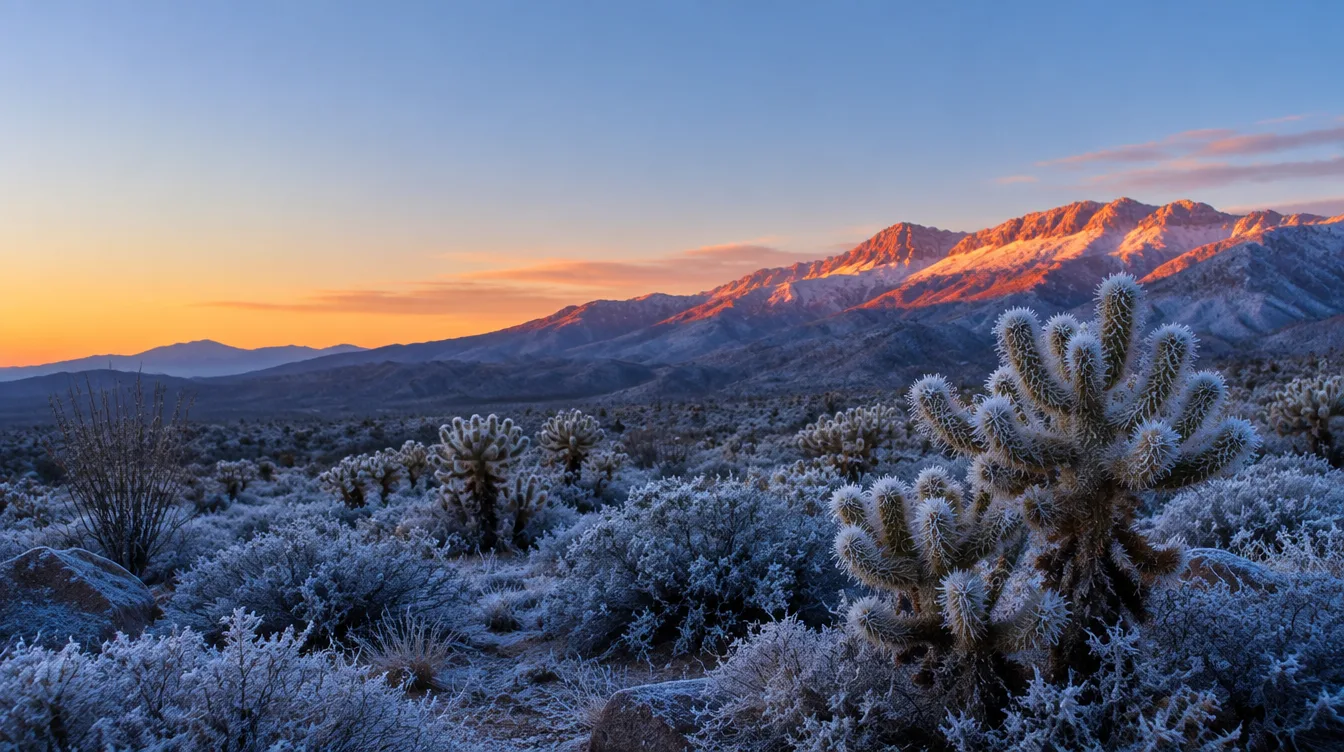
Hypothermia sets in when body temperature drops below 95°F. Early signs are intense shivering, clumsiness, and slurred speech; the dangerous sign is when shivering stops and confusion or drowsiness sets in — call 911. It does not require snow. It requires being cold, wet, and out of energy, and our desert supplies all three more often than people expect.
Frostbite is the other cold injury: numb, waxy, white or greyish skin that feels hard. Rewarm it in warm — never hot — water, and never rub it.
How this happens in the desert
The temperature swing. Clear desert air holds no heat. A 75°F February afternoon can fall to the 30s or low 40s overnight, and a hiker who set off in a t-shirt is in genuine trouble if they are still out at 9pm.
Wet plus wind. Hypothermia happens far more readily when clothing is wet, and it can develop at temperatures as mild as 50°F if someone is soaked and exposed to wind. A monsoon downpour, a fall into a creek, or simply heavy sweat on a windy ridge will do it. Water pulls heat from the body roughly 25 times faster than air.
Our high country. Flagstaff, Payson, the Mogollon Rim, and the Four Peaks are a short drive and a different climate entirely. People leave Phoenix at 70°F and arrive in snow with no coat.
Overnight stranding. Most local hypothermia cases we see involve someone whose day hike ran long — a wrong turn, an injury, a dead phone — and who then spent the night out.
Vulnerable people at home. Older adults, people with thyroid disease or diabetes, anyone who has drunk alcohol, infants in cold rooms, and people without reliable heating can become hypothermic indoors. It does not look dramatic; it looks like confusion and sleepiness.
Hypothermia: the signs
Mild (95–90°F): Intense shivering. Cold, pale skin. Clumsiness and fumbling hands. Slurred or mumbled speech. Tiredness. Faster breathing.
Moderate to severe (below 90°F) — call 911:
- Shivering stops. This is the critical sign and it is widely misread as improvement. It means the body has run out of the energy to generate heat.
- Confusion, poor judgement, or irrational behaviour — including removing clothing
- Slow, shallow breathing; slow or irregular pulse
- Drowsiness or difficulty waking
- Stiff muscles, loss of coordination
- Loss of consciousness
A useful field check often taught as the “umbles”: stumbles, mumbles, fumbles, grumbles. Any of them in the cold means act now.
What to do for hypothermia
- Call 911 for anything beyond mild shivering, and always if shivering has stopped or the person is confused.
- Get them out of the cold and wind — indoors, a vehicle, or a sheltered spot.
- Remove wet clothing and replace it with dry layers or blankets. Wet clothing is the main problem.
- Insulate from the ground, which drains heat fast. A pad, pack, or spare clothing underneath matters as much as a blanket on top.
- Cover the head and neck.
- Warm the core first — chest, neck, armpits, groin — with warm (not hot) compresses or skin-to-skin contact, not the arms and legs. Rewarming limbs first can push cold blood back to the heart.
- Warm sweet drinks if they are fully alert. Nothing by mouth for anyone drowsy or confused.
- Handle gently and keep them horizontal. In severe hypothermia the heart is irritable and rough handling can trigger a dangerous rhythm.
- No alcohol. No rubbing or massaging. No hot bath or direct high heat.
Do not assume someone is beyond help because they seem lifeless. Severely hypothermic people can appear dead and still recover with proper rewarming — the medical maxim is that they are not dead until they are warm and dead. Start CPR if there is no breathing, and keep going until help arrives.
Frostbite: the signs
Frostbite affects the extremities first — fingers, toes, ears, nose, cheeks.
Frostnip (the warning stage): cold, red skin, then numbness and tingling. No lasting damage. Rewarm and take it seriously as a signal.
Superficial frostbite: skin turns white or pale grey and feels deceptively warm, numb, or waxy. Blisters may appear a day or two after rewarming.
Deep frostbite: skin is white or bluish-grey, hard and wooden to the touch, with complete numbness. Joints may stop working. This is an emergency.
What to do for frostbite
- Get out of the cold and remove wet gloves, socks, and jewellery.
- Rewarm in warm water — 98 to 104°F (37–40°C), roughly comfortable bath temperature, for 15 to 30 minutes. Test it with an unaffected hand or elbow: numb skin cannot tell you it is burning.
- Never rub or massage frostbitten tissue. Ice crystals in the tissue cause damage when moved.
- Never use direct heat — fire, radiator, stove, hairdryer, or heating pad.
- Do not walk on frostbitten feet unless you have no alternative.
- Do not rewarm if refreezing is possible. Thawing and refreezing causes far worse damage than staying frozen until you reach shelter.
- Do not break blisters.
- Loosely bandage, separate affected fingers and toes with gauze, and elevate.
- Come in for anything beyond frostnip. Frostbite needs proper assessment, pain control, and wound care, and the true depth of injury is often not apparent for days.
Paracetamol or ibuprofen helps the pain, which can be severe during rewarming.
Preventing it locally
Carry a light insulating layer and a wind shell on any hike, however warm the afternoon. Take a head torch — most cold nights out start with running out of daylight. Check the sunset time, not just the temperature. Avoid cotton next to the skin for exertion; it holds sweat. Tell someone your route and return time. Going into the high country, put a coat, gloves, hat, blanket, and water in the car even if you are only stopping for lunch.
At home, keep an eye on older neighbours during cold snaps, and be aware that alcohol makes people feel warmer while accelerating heat loss.
Where to go
Call 911 if shivering has stopped, if the person is confused or drowsy, for any severe frostbite, or for anyone rescued after a night outdoors.
Come to our Emergency Room — 9700 N. Saguaro Blvd, open 24 hours, no appointment, and close to the trailheads — for hypothermia, frostbite beyond frostnip, or cold exposure in an older adult or young child. We can measure core temperature properly, rewarm you safely, run blood work on site, and check for the heart-rhythm and electrolyte problems that cold exposure causes. ER: (602) 671-7990.
Related: desert hiking safety
Sources
- CDC — Cold stress and hypothermia
- Mayo Clinic — Hypothermia
- Mayo Clinic — Frostbite
- National Weather Service — Cold weather safety